
What to do When a Client Doesn't Pay Your Invoice in BC
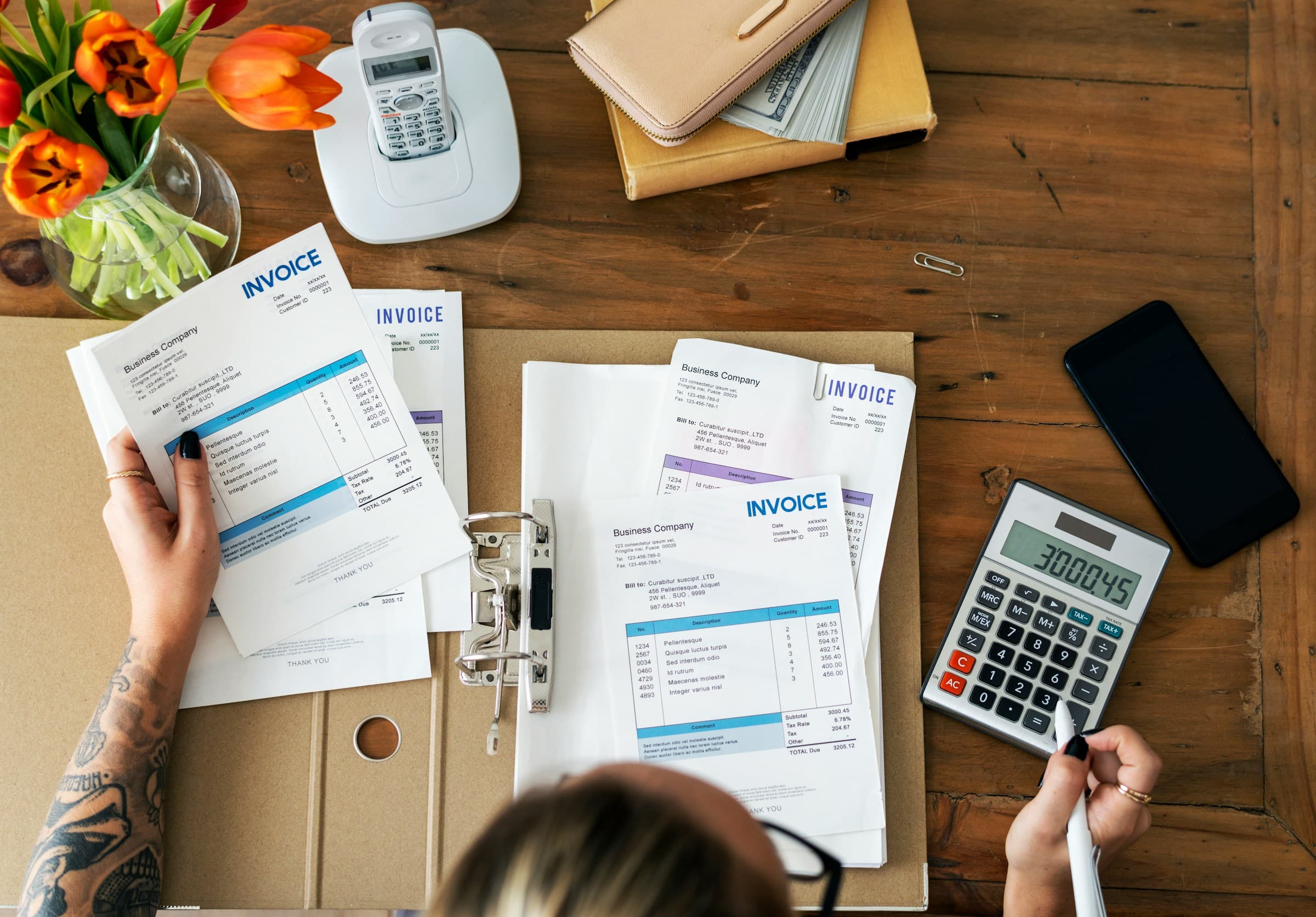
Few things are more frustrating than an invoice that is left unpaid by your customer. You did the work, you sent the bill, and now there's silence. When you're self-employed or running a small business, that missing money isn't just annoying. It's your rent.
Often, you’ll want to give up. Going after unpaid invoices feels awkward, and going to court sounds expensive and slow. But in British Columbia you have a real path, and most of it costs very little. Many unpaid invoices get settled long before anyone files anything.
Here's how to work through it.
Disclaimer! This article is general information, not legal advice. Your situation may have details that change the answer. Check the official sources linked here or talk to a lawyer, especially if a lot of money is involved!
Step 1: Get your paperwork together
Before you go after anything, gather what you have. You need to build a record.
Look for:
- The contract, quote, or written agreement
- The invoice itself, with its date and payment terms
- Emails or texts where the customer approved the work or the price
- Proof you delivered: photos, files, delivery confirmations, sign-offs
- Any record of partial payments
You probably don’t need all of it. But if this ends up in front of a tribunal, the person deciding has never met you or your customer. The documents you submit are what speak for you.
If you're missing something, now is the time to notice, not three months from now.
Step 2: Start friendly
Most late payments aren't malice. Invoices get buried, approvals stall, and the person who signs cheques goes on vacation.
So start warm. Send a short email a few days after the due date. Attach the invoice again, it saves them looking for it. Ask if everything's alright and whether they need anything from you. If that isn’t enough, try the phone. A short phone call often shakes something loose that four emails didn't.
Give this stage a real chance. You may still want this client next year, and a friendly nudge costs you nothing.
Step 3: Know your deadline
This part is important, so be focused. It’s the key to know if you are still within the time limit to file a claim; expiry bars you from starting a legal action, though the debt itself still exists.
In BC, the Limitation Act generally gives you 2 years to start any legal action, counted from when you discovered the claim. Miss it and you lose the right to sue, no matter how obviously you were owed the money.
I know, 2 years sounds like you have time, but not really. It goes faster than you'd think when you're busy and you keep telling yourself you'll deal with it next month. So act as soon as possible.
There's one important twist. The timer restarts if the customer makes any payment or signs a written acknowledgment of the debt. 'Writing' includes emails, but be aware that for a restart to be valid, it generally needs to be signed (electronically or by hand). Note that some communications, such as 'without prejudice' settlement offers, may not count.
So if your customer tells you on the phone that they'll pay you next month, follow up with an email: "Great speaking with you, just confirming you'll be paying the $2,400 on invoice #118 by March 15." Their written reply is worth having.
You can read more on the Small Claims BC limitation periods page.
Step 4: Check whether you can actually charge interest
Almost every small business puts something like "1.5% per month on overdue accounts" at the bottom of an invoice. But most of them can't collect it.
If you don't have a contract clause, you can still claim pre-judgment interest on a debt under BC's Court Order Interest Act.
Section 4 of the federal Interest Act says that if a contract sets an interest rate for a period shorter than a year without stating the yearly equivalent, the rate defaults to 5% per year. It doesn't necessarily zero the interest out, but you lose the higher contractual rate. If there was never an agreement at all (e.g., interest just printed on an invoice), you may get no interest at all.
So "1.5% per month" on its own can quietly collapse to 5% a year, or to nothing.
There's a second catch. Interest has to be agreed in advance. You can't decide an invoice is late and start adding charges that were never part of the deal. Simply printing a line on the invoice after the fact usually isn't enough. Keep that in mind for you invoice format going forward!
The fix is easy and takes 10 seconds. If you don’t have something like that yet on your invoices, change your template for the future!
Overdue accounts are subject to interest at 1.5% per month (18% per year).
Put it in your contract or your standard terms, not just on the invoice, and have the customer agree to it before the work starts.
Step 5: Send a formal demand letter
If multiple friendly reminders haven't worked, it's time to change the tone... A demand letter is a clear, businesslike letter that sets out what's owed and what happens next.
Keep it short and factual. Include:
- Who you are and what work you did for the customer,
- The invoice number, amount, and original due date,
- A short summary of your reminders so far,
- A clear deadline to pay, 7 to 30 days is typical,
- What you'll do if they don't pay.
Stay calm and professional. Anger will not help, and the letter may be read out loud by a tribunal member one day.
You're allowed to say you're considering legal action. You are not allowed to threaten anything improper: no threats to damage their reputation, contact their customers, or anything you have no right to do. A simple closing line works well:
If I don't receive payment or a payment arrangement by March 30, 2026, I intend to file a claim to recover the amount owing, plus interest and the costs of the proceeding.
You don't legally have to send a demand letter before filing a claim in BC. But it's a good idea, and it often works. It also shows you tried to sort things out reasonably, which never hurts.
How you send it matters
A letter that arrives on paper reads very differently from a sixth email. It's harder to ignore, and it signals that you're serious.
Registered Mail is worth the extra cost here, because you get proof it was mailed and a signature when it's delivered. That's exactly the kind of evidence that's useful later. Our guide to Canada Post's mailing options explains how Registered compares to regular Lettermail.
Be aware of the limits, though. Someone who suspects what's inside can simply not pick it up. So send your demand letter both ways: by email and by registered mail, and keep both records. If you'd rather not deal with printing and a trip to the post office, Online-Post can print and mail it for you.
Step 6: Know where your claim goes
If the letter doesn't work, BC sorts claims by dollar amount:
| Amount owed | Where it goes |
|---|---|
| Up to $5,000 | Civil Resolution Tribunal (CRT), online, no lawyer needed |
| $5,001 to $35,000 | BC Provincial Court, Small Claims division |
| Over $35,000 | BC Supreme Court |
Most unpaid invoices for small businesses land in the first row.
For most claims of $5,000 or less (excluding interest and expenses), the Civil Resolution Tribunal (CRT) is mandatory, you cannot choose to go straight to Provincial Court. Note that some types of claims cannot go to small claims at all. The Civil Resolution Tribunal is an online tribunal and part of BC's public justice system. You file from home, there's no courtroom, and it's built for people without lawyers. It starts with a negotiation stage where you and the customer try to settle directly, with a case manager helping.
CRT fees are modest. As of writing, applying costs $75 online for claims of $3,000 or less and $125 online for claims of $3,001 or more. If a tribunal member has to make a final decision, that's another $50 charge. Check the current CRT fee schedule before you start the process.
Two things worth knowing:
- If you settle during negotiation, the CRT can refund your application fee,
- If you win, the tribunal member may order the other side to reimburse your fees and reasonable expenses.
One catch for business owners: CRT fee waivers for low income are only available to individuals. Companies, partnerships and societies aren't eligible. If you're a sole proprietor you're considered an individual, so you may still qualify!
If your claim is over $5,000, then you'd need to file a Notice of Claim in Small Claims Court instead. Fees are set out in Schedule A of the Small Claims Rules and the registry will tell you what's due. If you're owed more than $35,000 and want to stay in the simpler Small Claims process, you can give up the amount over $35,000, but you can't come back for it later.
A note on serving the claim
Once you file in Small Claims Court, you have to formally deliver the documents to the customer. This is called service, and BC's rules for a Notice of Claim are strict.
You generally must serve it in person or by registered mail. If your customer is an incorporated business, registered mail goes to their registered office. To prove it was served, you use the signature or delivery confirmation from Canada Post tracking.
The rules have specific requirements, so follow the official serving documents guide rather than improvising this step.
If you work in construction
The process for trades is a bit different. They have an extra tool and an extra deadline.
A builders lien registers a claim against the property title. That's powerful leverage, because the owner usually can't sell or refinance until it's cleared. Contractors, subcontractors, suppliers and workers can all file one.
The deadline is tight: generally 45 days after the certificate of completion is issued, or after the head contract or improvement is completed, abandoned or terminated. That clock does not restart with each new unpaid invoice. Filing the lien is only the first step, you also have to start a court action within a set period or the lien expires.
These deadlines are unforgiving and the details depend on your role in the project. If you think you have a lien claim, talk to a construction lawyer quickly.
Also worth watching: BC's Construction Prompt Payment Act received Royal Assent on November 27, 2025. It sets mandatory payment timelines and a fast adjudication process for construction disputes. It is not yet in force, regulations are still being developed. The Province's prompt payment legislation page has the latest.
Winning isn't the same as getting paid
Worth saying clearly: an order in your favour is a piece of paper, not a deposit in your account.
If the customer still won't pay, you have to enforce it. A CRT order gets filed in court so it can be enforced like a court order. From there you might garnish wages or a bank account, or have assets seized. Small Claims BC covers enforcing orders in detail, it’s worth having a read.
And if the customer has no money, or the company has folded, you may not collect no matter how right you are.
That's not a reason to give up. It's a reason to think about the odds before you spend $125 and several months. For a $600 invoice against someone who's clearly broke, sometimes the honest answer is to write it off and change how you invoice.
How to avoid this next time
Every business owner learns this the expensive way once and there are some actions you can do to prevent it going forward.
- Take a deposit. 30% to 50% up front filters out a lot of trouble,
- Bill in stages on longer jobs, so you're never carrying the whole amount,
- Put your terms in writing keep track of the scope, price, due date, and interest stated as a yearly rate in writing before the project starts,
- Signed quote. Make sure to have a signed quote or contract before starting the work,
- Invoice immediately. The longer you wait, the less urgent it feels to them,
- Stop work when payment stops, if your contract allows it,
- Get promises in writing. It protects your two-year window.
Being firm about payment isn't rude. It's just how a business stays open.
Frequently Asked Questions
How long do I have to sue for an unpaid invoice in BC?
Generally two years from when you discovered the claim, under BC's Limitation Act. That's a maximum, not a minimum. You can start any time, and sooner is better. The clock restarts if the customer makes a payment or acknowledges the debt in writing, including by email.
Do I have to send a demand letter before I file a claim?
No. BC doesn't require it. But it's usually worth doing, it often gets you paid without filing anything, and it shows you made a reasonable effort to resolve things first.
Should I send my demand letter by registered mail?
It definitely helps. You get proof of mailing and a signature on delivery, which is useful evidence later. Just remember the customer can refuse to sign for it, so send by email as well and keep both records.
Can I charge interest on a late invoice?
Only if it was agreed in advance and worded properly. Under the federal Interest Act, a rate stated per month without the equivalent yearly rate can be limited to 5% per year, or disallowed. Write it as "1.5% per month (18% per year)" in your contract.
What if my customer is in another province?
You can generally sue in BC if the debt arose here, or if the customer lives or does business here. Collecting across a provincial border adds steps, so it's worth getting advice before you file.
Where can I get free help with this in BC?
Several places. The CRT's Solution Explorer gives free guidance on small claims. People's Law School has plain-language material on collecting a debt, plus a demand letter template. And Small Claims BC offers free help by phone or text through the Justice Education Society.
Skip the post office.
Upload your letter — we print it, stuff the envelope, and mail it across Canada.
- No printer, envelope, or stamp needed
- No subscription, no hidden fees
- Starting at $3 per letter